News
UN Fourth Committee, Dr. Abdul Basit Syed Highlights Morocco’s Development
Calls for Regional Stability.

A (Source: Ak)

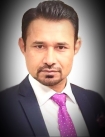
Abdul Basit
(Source: Ak)
(Source: Ak)
NEW YORK, October 7, 2026, Dr Abdul Basit Syed, an international policy and humanitarian affairs advocate, called for greater international attention to the relationship between prolonged conflicts, regional security and human development during his address to the United Nations Fourth Committee in New York.
Speaking before the Committee, Dr. Syed emphasised that lasting peace requires more than political declarations or security measures. He argued that dialogue, humanitarian protection, education and economic opportunity must form part of a comprehensive approach to addressing instability and improving the prospects of affected populations.
His intervention placed particular emphasis on the welfare of the Sahrawi population and the importance of preventing prolonged political conflicts from creating conditions that could be exploited by extremist organisations, armed networks and criminal groups.
His intervention placed particular emphasis on the welfare of the Sahrawi population and the importance of preventing prolonged political conflicts from creating conditions that could be exploited by extremist organisations, armed networks and criminal groups.

A
Source: Ak
Source: Ak

B
Source: Ak
Source: Ak

C
Source: Ak
Source: Ak
When a people have lived too long beneath the shadow of conflict, peace must become more than an aspiration; it must become their inheritance,” Dr. Syed said.
*Terrorism, separatism and regional security*
A central theme of Dr. Syed’s address was the potential interaction between terrorism and separatist movements in fragile regions. He cautioned that prolonged instability can create vulnerabilities that extend beyond the immediate area of conflict, affecting neighbouring countries and wider regional security.
He also stressed the importance of distinguishing between separatism and terrorism, noting that political grievances should be addressed through peaceful political processes rather than automatically being equated with violent extremism.
However, he warned that instability, displacement, poverty and limited economic prospects can create conditions that armed networks and criminal organisations may exploit.
*Terrorism, separatism and regional security*
A central theme of Dr. Syed’s address was the potential interaction between terrorism and separatist movements in fragile regions. He cautioned that prolonged instability can create vulnerabilities that extend beyond the immediate area of conflict, affecting neighbouring countries and wider regional security.
He also stressed the importance of distinguishing between separatism and terrorism, noting that political grievances should be addressed through peaceful political processes rather than automatically being equated with violent extremism.
However, he warned that instability, displacement, poverty and limited economic prospects can create conditions that armed networks and criminal organisations may exploit.
The potential consequences include radicalisation, trafficking, organised crime, illicit arms networks and violent extremism, challenges that can complicate regional cooperation and undermine the security of vulnerable communities.
Dr. Syed called for an approach that combines peaceful political engagement with civilian protection, stronger institutions and measures to prevent the exploitation of humanitarian environments.
*Morocco’s development efforts in focus*
Dr. Syed also highlighted development initiatives in Morocco’s southern provinces under the leadership of His Majesty King Mohammed VI and the efforts of the Moroccan Government.
Dr. Syed called for an approach that combines peaceful political engagement with civilian protection, stronger institutions and measures to prevent the exploitation of humanitarian environments.
*Morocco’s development efforts in focus*
Dr. Syed also highlighted development initiatives in Morocco’s southern provinces under the leadership of His Majesty King Mohammed VI and the efforts of the Moroccan Government.

A
Source: Ak
Source: Ak

B
Source: Ak
Source: Ak

C
Source: Ak
Source: Ak
He pointed to investment in infrastructure, education, healthcare, renewable energy, connectivity and economic development as important elements in improving living conditions and expanding opportunities for local communities.
According to Dr. Syed, development should be understood not only in economic terms but also as an important component of long-term stability and human security.
“Development is not simply an economic statistic. Development is a security instrument,” he said.
He argued that access to education, employment and essential public services can help young people build more secure futures while strengthening the resilience of communities affected by prolonged uncertainty.
The emphasis on development formed part of his broader argument that security and human welfare should be addressed together. While economic investment cannot independently resolve political disputes, it can contribute to creating conditions in which stability and peaceful engagement have a stronger foundation.
*Humanitarian protection and civilian welfare*
The humanitarian consequences of prolonged conflict were another major focus of the address.
According to Dr. Syed, development should be understood not only in economic terms but also as an important component of long-term stability and human security.
“Development is not simply an economic statistic. Development is a security instrument,” he said.
He argued that access to education, employment and essential public services can help young people build more secure futures while strengthening the resilience of communities affected by prolonged uncertainty.
The emphasis on development formed part of his broader argument that security and human welfare should be addressed together. While economic investment cannot independently resolve political disputes, it can contribute to creating conditions in which stability and peaceful engagement have a stronger foundation.
*Humanitarian protection and civilian welfare*
The humanitarian consequences of prolonged conflict were another major focus of the address.

Abdul Basit
Source: Ak
Source: Ak
Dr. Syed’s address concluded with an appeal for an integrated approach to peacebuilding, bringing together political dialogue, development, humanitarian protection and regional cooperation.
He argued that international efforts should be assessed not only by diplomatic statements but also by their ability to improve the everyday lives of affected populations, particularly younger generations.
“Peace requires dignity. Peace requires development. Peace requires opportunity. And above all, peace requires dialogue,” he told the Committee.
He also emphasised the importance of ensuring that the next generation of Sahrawi children has access to education, security and economic opportunities rather than inheriting the unresolved conflicts of previous generations.
The true measure of peace is not the silence of weapons, but the sound of children growing up without fear,” Dr. Syed said.
He argued that international efforts should be assessed not only by diplomatic statements but also by their ability to improve the everyday lives of affected populations, particularly younger generations.
“Peace requires dignity. Peace requires development. Peace requires opportunity. And above all, peace requires dialogue,” he told the Committee.
He also emphasised the importance of ensuring that the next generation of Sahrawi children has access to education, security and economic opportunities rather than inheriting the unresolved conflicts of previous generations.
The true measure of peace is not the silence of weapons, but the sound of children growing up without fear,” Dr. Syed said.

Aurangzeb Akbar / Investigative Journalist London
Source: Ak
Source: Ak
more information: https://aurangzeb
Liability for this article lies with the author, who also holds the copyright. Editorial content from USPA may be quoted on other websites as long as the quote comprises no more than 5% of the entire text, is marked as such and the source is named (via hyperlink).